
Mold Remediation After Water Damage in Bend, OR
Mold can start on wet drywall within 24 to 48 hours. Independent Central Oregon restoration companies assess, contain and remove it, and fix the moisture that caused it. Get free quotes.
Get a Free Quote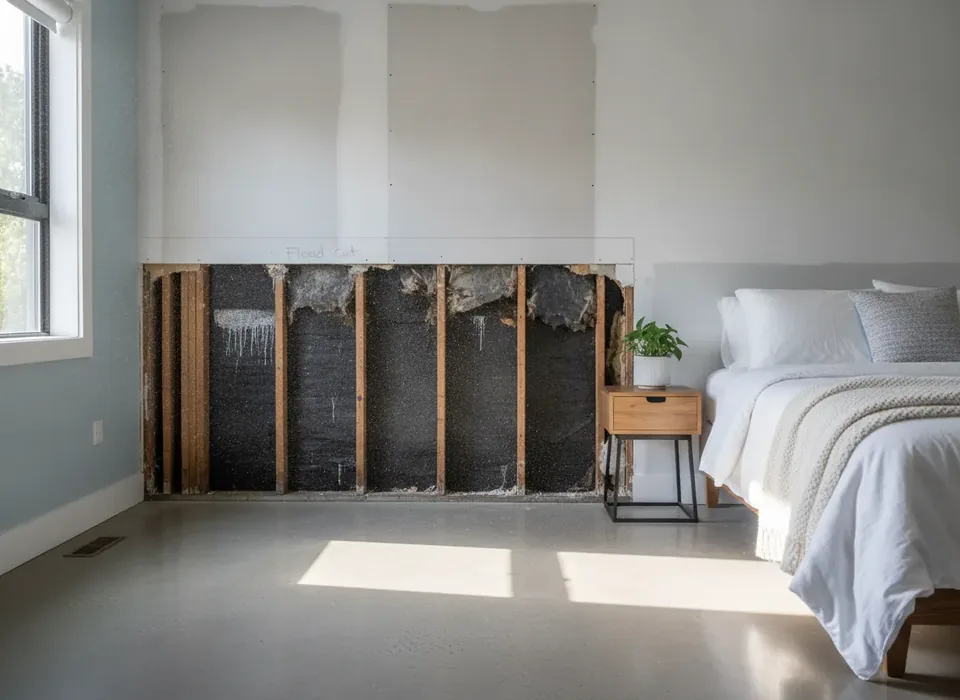
Mold is a moisture problem first
Every mold job starts the same way: find the water. A hidden supply-line drip, a roof leak that only shows during a thaw, a shower pan that failed, a crawl space that never dried after last spring. Remove the growth without fixing the source and it returns. The companies on this network treat mold as the second half of a water damage job.
If you have just found it: stop the leak if you can, keep the room closed, do not scrub or spray large patches (that spreads spores), and photograph it with something for scale. Do not pour bleach on drywall; it wets the paper facing and barely touches the roots.
Then send the quote form or call Call (727) 300-6656. Independent, Oregon CCB-licensed companies serving Bend and Central Oregon can reply with free quotes. Bend Water Damage Pros is a referral service, not a contractor, and there is no obligation.
What mold remediation after a leak involves
There is no Oregon mold licence, so the scope of work is what separates a careful company from a spray-and-pray one. This is the scope to ask for.
Find and fix the moisture
Moisture meters and often a thermal camera locate the wet area and its source. If the leak is active, a plumber or roofer fixes it before remediation starts; otherwise the work is wasted.
Contain the area
Plastic sheeting seals doorways and vents; a HEPA-filtered negative air machine keeps spores from drifting into the rest of the house during removal.
Remove, do not just treat
Moldy drywall is cut out, typically as a flood cut 12 to 24 inches above the visible water line so the hidden growth behind it goes too. Wet insulation and carpet pad leave as well. Framing is cleaned, sanded or wire-brushed where needed, then treated. Our post on why restorers cut drywall two feet up explains the logic.
HEPA clean and dry
Surfaces inside containment are HEPA-vacuumed and damp-wiped, then air movers and a dehumidifier dry the cavity to a verified standard. See structural drying.
Verify and rebuild
The company documents final moisture readings. If you want a third-party clearance, an independent industrial hygienist can sample before the wall is closed. Rebuild needs a CCB general or specialty endorsement.
Mold in a high-desert climate: less of it, but not none
Bend's semi-arid air means fewer of the chronic humidity problems that plague wetter parts of Oregon. Mold here is almost always tied to a specific water event: a frozen pipe that split in January, an ice dam that dripped into a ceiling for a week, a dishwasher line that seeped under the floor for a season. Inside a closed wall cavity or under vinyl flooring, the dry outdoor air does not help; the cavity stays wet and warm and the clock runs.
Three Oregon rules shape the job. First, the CCB confirms no special license is required for mold cleanup, so there is no state credential to check; look instead for a current CCB license (verify at search.ccb.state.or.us), water-damage experience and training such as IICRC's applied microbial remediation course, which many local technicians hold. Ask. Second, if the home was built before January 1, 2004, DEQ requires an asbestos survey by an accredited inspector before drywall, flooring or texture is disturbed (OAR 340-248-0270); older textured ceilings and vinyl floors are the usual suspects. Third, in pre-1978 homes, disturbing more than six square feet of painted surface per room requires a CCB lead-based paint renovation licensee. The Drake Park district and other westside neighbourhoods built between 1910 and 1954 fall squarely in both windows.
Crawl spaces deserve a specific mention. A spring seepage event in La Pine or Sunriver that nobody noticed can leave joists and subfloor growing mold by summer, with a musty smell upstairs as the only sign. The crawl space page covers that scenario.
What mold remediation typically costs
Mold remediation after a leak typically runs $1,500–$4,000, or roughly $4.75–$5.50 per square foot of affected area. That usually covers containment, removal, cleaning and drying but not the rebuild: new drywall adds about $1.50–$3 per square foot and new flooring more. A small patch behind a vanity sits at the low end; a crawl space or several rooms can exceed the range.
Typical ranges, national sources, Jan–2025 data; Central Oregon quotes vary. Your written quote is the real number.
Our Bend cost guide has a calculator that includes a mold treatment add-on.
Insurance and mold
Mold coverage is one of the most variable parts of a homeowner policy. Many policies cover mold only when it results from a covered sudden loss, such as a burst pipe, and then cap the amount; mold from a slow leak, poor maintenance or high humidity is commonly excluded. The practical lesson is to report water damage immediately, because a claim filed within days reads very differently from one filed after mold has appeared. Keep photos from the day of the loss and the drying log from the restoration company. If you disagree with a decision, Oregon's Division of Financial Regulation has consumer advocates who can explain your options; we cannot give legal advice.
Do not wait when
- Growth covers more than a few square feet or appears in more than one room.
- You can smell it but cannot see it, which points to a wall cavity, subfloor or crawl space.
- Someone in the household has asthma, allergies or a weakened immune system.
- The water source is still active or unknown.
- The growth followed a sewage backup, which adds Category 3 precautions.
How a full water loss is handled from first call to rebuild is on the process page.
Mold after water damage FAQ
Do I need mold testing before remediation?
Not always. If you can see mold and you know where the water came from, most companies and the EPA agree that testing adds cost without changing the plan: fix the moisture, remove the growth. Testing is useful when you suspect hidden mold, when there is a dispute with an insurer or landlord, or when you want independent clearance after the work. If you test, use a hygienist who does not also sell remediation.
Does Oregon license mold remediation companies?
No. Oregon's Construction Contractors Board states that a special license is not required for mold cleanup. What is required is a CCB license with the right endorsement for any tear-out or rebuild of drywall, flooring or framing, which is almost always part of the job. So vet the company on its CCB status, its water-damage track record and its training rather than on a mold license that does not exist.
Can I clean up mold myself?
The EPA's rule of thumb is that a homeowner can handle a patch under about 10 square feet on a hard surface with detergent, gloves, goggles and an N95. Mold on drywall, insulation or carpet means those materials come out, and growth that keeps returning means the moisture source is not fixed. Anything larger, anything inside a wall, or any household with asthma or allergies is a job for a crew with containment.
Will the mold come back after remediation?
Only if moisture does. Mold spores are everywhere; they need water to grow. If the leak is repaired and the structure is dried to a verified standard, remediated areas stay clean. Ask for the drying log and the moisture readings at completion, and keep an eye on the original leak point through the next winter.
What symptoms should make me see a doctor?
Persistent coughing, wheezing, sinus congestion, eye irritation or worsening asthma that started after a water event is worth a conversation with your doctor; tell them about the leak. People with allergies, asthma or weakened immune systems are more sensitive. This page describes cleanup practice, not medical advice; a physician is the right person to assess symptoms.
Get free quotes from Central Oregon restoration companies
Describe where the mold is, what leaked and when, and the age of the home. Independent, CCB-licensed Central Oregon companies reply with free, no-obligation quotes.
Water where it shouldn't be? Get free quotes.
Tell us what happened and independent Central Oregon restoration companies can reply with no-obligation quotes.