
Water Damage Restoration in Sunriver, OR

Sunriver is about 4,200 homesites at 4,170 feet, with a record low of −27°F and most houses empty for much of the year. That is the setup for a freeze nobody sees for days. Tell us what happened and independent Central Oregon restoration companies can reply with free quotes.

Get a Free Quote

Not in Sunriver right now? Call whoever can reach the house first: your rental manager, a neighbor, a caretaker. Ask them to shut the main valve and the breaker for the water heater, open the front door for ventilation only if it is above freezing, and send photos. Then fill out the form below with the lockbox or manager details so companies can quote quickly.

82.5 percent seasonal vacancy

NeighborhoodScout puts Sunriver's vacancy rate at 82.5 percent, almost all of it seasonal, and one management-company dataset counts about 1,259 active Airbnb listings. A split line in an empty house on a Tuesday in January can run until the Friday check-in.
53.7 inches of snow a year

That is more than double Bend's 21.6 inches. Snow load on low-pitched roofs, ice at the eaves and meltwater working under shingles make roof leaks a repeat winter problem.

Shallow groundwater

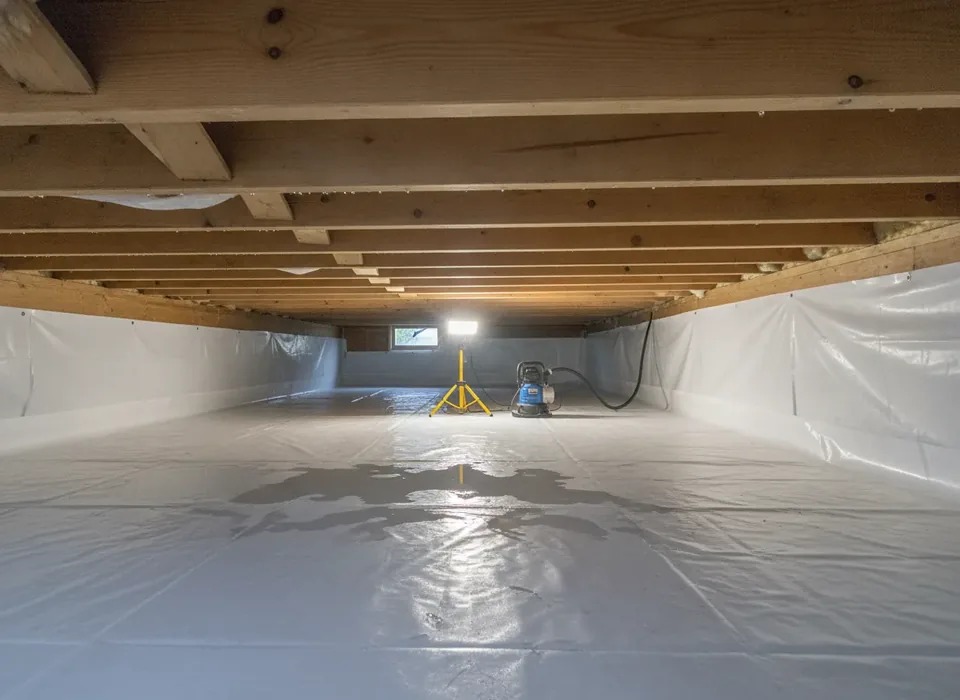
Oregon DEQ describes the Sunriver–La Pine area as porous volcanic soil over shallow aquifers, with private wells as the primary drinking water source on septic properties. After spring melt, crawl spaces here can take on groundwater with no plumbing failure at all, and septic systems under load can back up into the lowest fixture.

Standing water in a crawl space with a pump running

What a restoration company does at an unattended Sunriver home

They meet your contact or use the access you give and map moisture through the house with meters. They extract standing water, pull saturated carpet pad and wet insulation, and set drying equipment that runs for several days with readings logged each visit. If drywall has to come out and the house predates January 1, 2004, Oregon requires a DEQ asbestos survey first; there is no emergency exemption.

In Oregon, the extraction and drying part of that job needs at least a CCB Residential Restoration endorsement, and tear-out or rebuild needs a general or specialty endorsement. Any owner can verify a company at search.ccb.state.or.us from anywhere in the country.

Relevant services

Insurance: sudden and accidental losses are usually covered, but freeze claims in unoccupied homes often come with conditions about maintaining heat or shutting off water. Oregon's Division of Financial Regulation warned in July 2024 that you are not required to sign an assignment-of-benefits form to get repairs done. Ask your adjuster before signing anything a contractor hands you.

Request Sunriver quotes

Describe the problem once, including how a crew can get in. Independent companies that serve Sunriver reply with no-obligation quotes, and they typically offer 24/7 emergency response. You can also call Call (727) 300-6656.

No obligation. Independent local companies reply to you directly, often within the hour for active leaks.

Sunriver water damage questions

Pipes burst at my Sunriver house while I was away. What do I do from out of town?

Get someone local to shut the main and the water heater. A property manager, rental company or neighbor is fastest. Then request quotes here and say the house is unoccupied and how a crew can get access. Notify your insurer the same day and ask what your policy requires about heat and occupancy. Take screenshots of any thermostat or leak-sensor alerts; they help document when the loss started.

How cold does Sunriver actually get?

Colder than Bend. Sunriver sits at about 4,170 feet with a January mean daily low of 19.6°F and a record low of −27°F, and it averages 53.7 inches of snow a year. Pipes in exterior walls, under decks and in unheated crawl spaces are the ones that freeze. Leaving heat at a steady temperature, opening cabinet doors and shutting off and draining the system before a long absence all help.

Sunriver is on wells and septic. Does that matter for water damage?

It can. Oregon DEQ describes the Sunriver–La Pine area as having porous volcanic soil and shallow groundwater, with private wells as the main drinking water source for septic properties. A septic backup is Category 3 sewage and needs a different cleanup than a clean-water leak. Shallow groundwater also means crawl space seepage after spring melt is more common than in Bend.

Nearby areas

Water where it shouldn't be? Get free quotes.

Tell us what happened and independent Central Oregon restoration companies can reply with no-obligation quotes.

Call NowFree Quote