Water Damage Restoration Cost in Bend, OR

Typical ranges by water category, class of loss and material, plus a planning calculator. Then get real quotes from independent Central Oregon companies.

Get Free Quotes

Typical water damage restoration prices

Typical ranges, national sources, Jan–2025 data; Central Oregon quotes vary. Mileage to Sunriver, La Pine or Madras, crawl-space access and after-hours calls all move the number.

ItemTypical rangeSource
Whole job, typical$1,200–$5,000 (avg ≈ $3,000–$3,800)Fixr Jan 2025; HomeAdvisor 2025
Small clean-water extraction + drying$500–$1,000Fixr
Extraction per sq ft — clean / gray / black water$3.75–$4.25 / $4.10–$6.50 / $7–$7.50Fixr
Class of lossClass 1 $150–$400 · Class 2 $500–$1,000 · Class 3 $1,000–$3,000 · Class 4 $20,000+Fixr
Crawl space / basement dry-out (≈500 sq ft, no rebuild)$2,000–$7,000Fixr
Sewage backup cleanup$2,000–$10,000Bob Vila 2025
Mold remediation after a leak$1,500–$4,000 ($4.75–$5.50/sq ft)Fixr
Appliance overflow (dishwasher/washer, Class 2)$500–$1,000Fixr
Material repair per sq ftdrywall $1.50–$3 · carpet $4.75–$10.50 · hardwood $10–$15Fixr
Labor / emergency fees$70–$200/hr; after-hours call-out $50–$200Fixr

Ranges are national planning figures, not Bend quotes. The only price that matters is the written estimate from the company standing in your house.

What drives the price

Water category

Category 1 is clean supply water. Category 2 (gray) is dishwasher, washer or shower overflow. Category 3 (black) is sewage, septic backup or outside floodwater. Each step up means more protective gear, more disinfection and more material thrown away rather than dried.

Class of loss

Class describes how much of the room absorbed water and how hard the materials are to dry. Class 1 is a small area of low-porosity material; Class 4 is water bound into hardwood, plaster, concrete or crawl-space soil that needs specialty drying over many days.

Time on the floor

Hours matter. Carpet pad caught the same day can often be dried in place. After a few days, pad, baseboard and the bottom of the drywall usually come out, and restorers in Bend typically say mold can start within one to two days in trapped moisture.

Tear-out and the asbestos survey

If drywall, flooring or insulation must be removed in a home built before January 1, 2004, Oregon DEQ requires an asbestos survey first (OAR 340-248-0270). The survey itself is an added cost, and positive results mean a DEQ-licensed abatement contractor handles that material. Pre-1978 homes add lead-safe work rules, which only CCB LBPR licensees may bid on.

Access and distance

A crawl space with 18 inches of clearance takes longer to pump, strip and dry than an open room. Companies based in Bend or Redmond may add travel time for Sunriver, La Pine, Madras or Prineville. Ask whether mileage is on the estimate.

Rebuild versus mitigation

Mitigation (extraction, demo, drying) is usually billed separately from rebuild (new drywall, paint, flooring). In Oregon, water removal needs at least a CCB Residential Restoration endorsement, while tear-out and rebuild need a general or specialty endorsement, so sometimes two licensed companies are involved.

Planning calculator

Multiply wet area by the per-square-foot extraction range for your water type, then add the extras that apply. Clamp: 50–2,000 sq ft.

Typical range: $1,125–$1,275

Planning figure only. Insurers and contractors price by IICRC-standard Xactimate line items (each piece of equipment, each square foot of demo, each hour of labor), so a real estimate will be itemized differently. Labor, after-hours fees, asbestos survey, contents handling and rebuild finishes are not included.

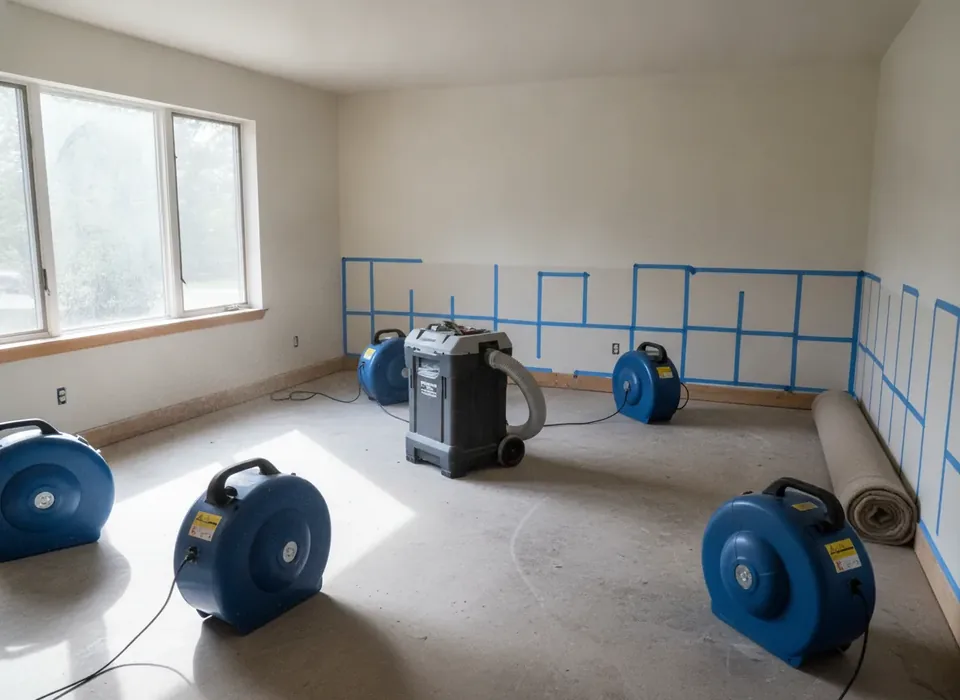
Air movers and a dehumidifier drying a living room

What a restoration estimate usually includes

  • Inspection and moisture mapping of walls, floors and the crawl space, with photos for your claim
  • Water extraction and removal of unsalvageable materials (pad, baseboard, flood-cut drywall)
  • Antimicrobial treatment on affected surfaces
  • Air movers and dehumidifiers, billed per unit per day, with daily moisture readings
  • A final dry log showing materials reached dry standard
  • Rebuild quoted separately, often by a different licensed contractor

Ask for the dry log. It is the document that proves the work was finished and the one your adjuster wants most.

Insurance and what you actually pay

What is usually covered

Standard Oregon homeowners policies generally cover sudden and accidental water damage: a burst pipe, a failed water heater, an overflowing appliance. Your out-of-pocket is your policy's deductible plus anything the policy excludes or caps. Gradual leaks, long-term seepage and poor maintenance are commonly excluded, and river flooding requires a separate NFIP or private flood policy.

What Oregon law expects of the insurer

ORS 746.230 lists unfair claim settlement practices. Insurers must acknowledge and act promptly on claim communications, investigate reasonably before denying, and affirm or deny coverage within a reasonable time after proof of loss. If a claim stalls, Oregon's Division of Financial Regulation has consumer advocates who take complaints. This is general information, not legal advice; ask your adjuster or a lawyer about your situation.

Assignment of benefits

In July 2024 Oregon DFR warned homeowners about assignment-of-benefits forms after disasters. Signing one transfers your claim rights to the contractor, who can then deal with the insurer and may sue in your name; you may lose the right to mediation. You are not required to sign one to get repairs done. Read our guide on AOB forms in Oregon.

Documentation that lowers friction

Date-stamped photos before cleanup, the plumber's invoice showing the cause, the restoration company's moisture map and dry log, and a contents inventory. Keep every receipt, including emergency supplies. Read does homeowners insurance cover water damage in Oregon for the full walkthrough.

Cost questions

Why is the cost range so wide?

Because three things multiply each other: how much area is wet, how dirty the water is, and how long it sat. A 100 sq ft clean-water spill caught the same day is a few hundred dollars of extraction and drying. The same spill left for a week in a pre-2004 Bend home can mean an asbestos survey, drywall tear-out, subfloor replacement and mold treatment.

Does Bend's dry air make restoration cheaper?

Sometimes. Low humidity speeds evaporation, so drying can finish in fewer days, which can reduce equipment time on the invoice. The flip side is that surfaces dry fast while framing and insulation stay wet, and a job stopped too early comes back as mold. Ask how the contractor verifies dry standard with a moisture meter before pulling equipment.

What does sewage or septic backup cleanup cost?

Category 3 water is the most expensive to handle. Bob Vila (2025) puts sewage backup cleanup at $2,000–$10,000, and Fixr lists black-water extraction at $7–$7.50 per sq ft before any rebuild. Porous materials that touched sewage, such as carpet, pad and drywall, are normally removed rather than cleaned, which drives the higher end.

Will my insurance pay the restoration company directly?

That depends on your policy and the company. Some contractors bill the insurer directly; others invoice you and provide the documentation for your claim. Oregon's Division of Financial Regulation warned in July 2024 that you are not required to sign an assignment-of-benefits form to get repairs done, and that doing so transfers your claim rights. Read anything you sign and ask your adjuster.

Are the quotes really free?

Yes. Bend Water Damage Pros charges homeowners nothing, and the independent companies who reply provide quotes at no cost. Some contractors may charge for a detailed written estimate on very large or disputed losses; they will tell you up front if so. You are never obligated to hire anyone who responds.

Get real numbers from local companies

Ranges are a start. The quote that counts comes from a licensed Central Oregon company that has seen the loss. Describe what happened once and independent providers can reply with free, no-obligation quotes. Verify any company at search.ccb.state.or.us before you sign.

Prefer to talk? Call (727) 300-6656

Request free quotes

No obligation. Independent local companies reply to you directly, often within the hour for active leaks.

Water where it shouldn't be? Get free quotes.

Tell us what happened and independent Central Oregon restoration companies can reply with no-obligation quotes.

Call NowFree Quote